Showing posts with label alternative energy. Show all posts

Tuesday, July 31, 2018

Will the NEG transform Australia's energy landscape?

Greetings from the Australian National University in Canberra, where a panel is speaking on "Will the NEG transform Australia's energy landscape?".

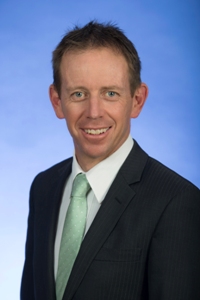
Shane Rattenbury
First up is Mr Shane Rattenbury, ACT Minister for Climate Change and Sustainability.  Minister Rattenbury was one of the recipients of a letter today, from 23 energy researchers: "Call for Full Release of National Energy Guarantee Modelling". He pointed out that the National Energy Guarantee (NEG) will not reduce emissions significantly more than "business as usual". Also there will be a considerable number of coal plants reaching their design life just after 2030, requiring to be replaced.

Also to speak are Professor Frank Jotzo (Crawford School of Public Policy, ANU), Dr Hugh Saddler (energy consultant) and Ms Katharine Murphy (Political Editor, Guardian Australia).

ps:  Professor Jotzo and Dr Saddler agreed that the NEG was not a lot better than "business as usual". Katharine Murphy, looking at the political aspects, suggested the NEG could be useful, not because it achieves any fundamental reform, but primes the political process for something more ambitious.

Tuesday, April 10, 2018

Australian Energy Security Board Not On Track to Deliver Affordable Energy

Greetings from the Australian National University in Canberra, where Clare Savage, Deputy Chair of the Energy Security Board is speaking on the National Energy Guarantee. Clare said that the board would not be proposing technical reliability measures, be included in energy suppliers contracts, as this would be too complex. However, financial markets have far more complex traded commodities, so I can't see why this can't be done for energy. If reliability measures are not being provided as part of the market based energy system, then I can't see how they can be provided cost-effectively. If reliability is just a requirement imposed on providers we are likely to see a similar situation as with wires and poles, where companies overbuilt the system in the name of reliability, to push up prices to the consumer and thus increase profits. The Australian Energy Security Board is going down a path which will deliver reliable power, but it will be expensive power, with high carbon emissions.

The Australian Energy Security Board has to work within the constraints set by government. However, it should still be possible to design a system which will reward innovations in new technology which can deliver reliability, along with low emissions at an afford able price.  I suggest the Board change their approach to explore those options.

Tuesday, February 27, 2018

ACT Virtual Big Battery Proposed

Greetings from the Renewables Innovation Hub, in Canberra, where I have been attended a workshop on the Energy Efficiency Improvement Scheme (EEIS). This is a suite of measures to reduce energy and greenhouse gas emissions. One proposal is to provide incentives for  Demand Response (DRM) capable air-conditioners. Some participants pointed out that while there were many DRM capable units already installed, few were activated. So I suggested the ACT implement a DRM controller and require all units under the scheme to be connected to it, unless they were connected to an alternative DRM controller. This would provide the ACT with a virtual (and much cheaper) alternative to South Australia's big battery.

Sunday, June 11, 2017

Finkel Report on Australian Electricity Market No Solution

The "Blueprint for the Future: Independent Review into the Future Security of the National Electricity Market" by
Alan Finkel, Karen Moses, Chloe Munro, Terry Effeney and Mary O’Kane has been released by the Australian Government. The 212 page report includes eight pages of recommendations. The report proposes short term regulation requiring energy suppliers and distributors to provide a reserve of generating capacity (dispatchable power). However, the report doesn't address how to do this in a cost effective way. The likely result is that supplying companies will take the opportunity to use this as a reason to further increase prices.

This report is very much focused on the short term  issues of reliable electricity supply which are only an inconvenience to the community, but a major political threat to governments. The report fails to adequately address the long term issue of carbon pollution from coal and gas fired power stations which places the prosperity of the nation and the safety of its citizens at risk.

The authors of the report have met their brief, in providing a way for the Australian Government to avoid having to deal with difficult issues of human caused climate change and reliable electricity supply.  Instead the industry regulator will be required to introduce short term regulations which will increase the cost of electricity in the short and long term, as well as greatly adding to the cost decades from now, when Australia is forced to take effective action on climate change.

If the aim is to increase the reliability of the electricity supply, then there are some simple low cost ways through modern technology. Modern air-conditioners use electronically controlled motors (so called "inverters"). It would require only a small enhancement to the program controlling the inverters to have them help stabilize the power grid. Australian law could be changed to require all new domestic and industrial air-conditioners permanently connected to the grid to be programmed to help maintain it. This would cost a few dollars per unit and the user would be unlikely to notice the difference. A few times a year the air-conditioner would  switch to low power mode for a few minutes to help maintain the grid.

Dr Evan Franklin, Senior Lecturer, Research School of Engineering, ANU, presented an excellent seminar "Electrical power systems with high penetration of renewables: the physics behind the political bluster". Dr  Franklin provided a clear and credible analysis of what caused the South Australian blackout (which precipitated the Finkel Report) and options to improve the reliability of supply while also increasing the use of renewable energy and phasing out coal.

 Unfortunately it seems unlikely the Australian Government would feel able to accept Dr Franklin's advice. One hope for the future is that technology will come to the rescue. The continually dropping cost of solar and wind energy, along with options for battery and pumped hydro storage will likely have more influence on energy options than Australian Government policy. Australia will likely achieve a reliable renewable energy system despite, not because of, government policy.

On Thursday I attended a community energy session at EnergyLab hosted by University of Technology Sydney. Speakers from ClearSky, Pingala,  and Community Power Agency put the case for a different energy future for Australia,  where the community is involved in planning and implementation.
Thursday, October 20, 2016

Clean Energy Innovation

Greetings from the Australian National University in Canberra, where Dr Julio Friedmann, Senior Fellow, Lawrence Livermore National Laboratory, is speaking on The Importance of Innovation to Global Clean Energy Development, Past and Future. Dr Friedmann spoke of how there is a glut of hydrocarbon energy available, but also face climate change. He described the Kyoto Protocol as "Mutually Assured Destruction", but praised the Paris Agreement (COP21)in more positively. In the long term global emissions per person need to reduce to that of someone in Zimbabwe, while aiming to improve quality of life.  

Dr Friedmann pointed out the USA has a network of government laboratories working on energy. He also pointed out that Bill Gates, and other entrepreneurs, are contributing capital to long term high risk venture (Breakthrough Energy Coalition), to provide an example to the private sector. To summarize this Dr Friedmann said policy drive finance which then encourages innovation. That is certainly one possible approach, but I suggest this is not the way we got the Internet or the World Wide Web. Both were directly government funded inventions (the Internet by US DoD and the Web European pure science budgets). Only after development with government funding were the Internet and web commercialized.

However, what seems to be missing from Dr Friedman's analysis are political and social aspects. We already have technological and financial solutions to climate change. However, these solutions are politically and socially unpalatable. By offering the prospect of technological fixes in the future, researchers may delay the implementation of proven but difficult solutions. 

Hi tech solutions do not always solve real problems. Dr Friedman gave the example of the testing of aircraft using simulations. However, simulations have limitations. As an example, the launch bar on the F-35C did not lower far enough to hook up to the catapult for launch and the tailhook did not catch on the arrestor wire on the first test. What was needed was not a computer, but a large hammer.

Dr Friedman ended by talking about the need for and possibility of Carbon Dioxide to fuel conversion. This seemed to me an excellent example of what not to do. The problem is to fine an energy source which does involve the burning of carbon as this produces carbon dioxide pollution. Synthetic carbon based fuel can be used to store and transport energy in a convenient fuel, for transport, but will not reduce carbon emissions. Making synthetic fuel will require net energy input. where there are no alternatives, such as for aircraft, synthetic fuel will be an option. But for land transport, there are alternatives such as public transport to replace private cars and freight trains to replace trucks. This requires sophisticated social and political action, rather than new engineering.

Friday, December 18, 2015

Wind Turbine Global Control Center Opens in Canberra Innovation Precinct

On Monday, Simon Corbell, ACT Minister for the Environment, opened Windlabs headquarters at 60 Marcus Clarke Street in Canberra. Wind farms in Australia, and around the world, will be monitored and controlled from here.

Windlabs new HQ is at the north-west corner of what I call the "Canberra Start-up Business Boomerang". These are the city blocks between the Australian National University campus and the Canberra CBD. In the geographic center of this area is the Canberra Innovation Center, which is surrounded by numerous technology and education companies, as well as  related government agencies.

ps: In 2010, my student Sam Fernandes, undertook "Project Cervantes: Can a web server be powered by a wind turbine?". The answer was "no", but he found, that under ideal conditions 40% of the power for a data centre could be provided by the wind.

Sunday, November 22, 2015

Flexible Coal: Better to Wear Away Than Rust Away

"Flexible Coal" with current base-load power stations converted to peaking plants, may provide a way to increase the use of renewable energy and reduce greenhouse gas emissions. Photo-voltaic and wind generated power are intermittent: when the sun stops shining, or the wind stops blowing, the energy production stops. Conventional wisdom has been that these renewable sources could not make up more than a small fraction of energy generation, until an affordable way to store that energy was found.

The problem was that coal fired power stations, now used to provide the base-load in countries such as Australia, could not be simply switched on when needed. However, the report "Flexible CoalEvolution from Baseload to Peaking Plant", from the U.S. Department of Energy, Office of Energy Efficiency and Renewable Energy, indicates that with some limited hardware modifications and changes to  operational practice, coal fired power stations can be cycled on and off and run at lower output than previously thought (less than 40% of capacity). Cycling the plant does damage equipment and limit its life expectancy, but may be preferable to scrapping a working plant and having to replace it with an alternative such as gas power.

Modifying coal power stations to provide a backup for renewable energy could significantly reduce greenhouse gas emissions far quicker than storage options, such as batteries. Instead of coal providing the base-load and renewable energy supplementing this, PV and wind could provide most of the energy on most days of the year. Coal power would just be switched on when needed: on cloudy windless days, at peak times during the day and at night. Also excess renewable power could be used to heat the coal station's equipment, so it is ready to start more quickly and also reduce damage from cooling.

The conversion of coal stations to peaking plants would provide a political solution for the Australian Government, needs to find a way to reduce greenhouse gas emissions, while not being seen to be damaging the Australian coal industry. Obviously off-peak coal power stations are not a long term option, as they still will emit significant amounts of carbon dioxide pollution. However, this could be a useful interim measure for the decade or so it takes for storage of renewable energy to become practical.

Friday, September 04, 2015

Managing the growing energy cost of the Internet

Professor Rod Tucker, University of Melbourne will speak on "Managing the growing energy cost of the Internet" at the Australian National University in Canberra, 12.30pm 29 September 2015.
"The size and capacity of the global telecommunications infrastructure is growing as the demand for on-line data and new Internet services continuously expand.  The Internet and its associated data centres presently consume only a few percent of the global electricity supply, but this consumption is growing. In this talk, I will discuss the key contributors to energy consumption in the Internet and describe some approaches to the design of a more energy-efficient network."
Also, ANU's award winning course ICT Sustainability (COMP7310) is being offered on-line to students worldwide, commencing February 2016. The course notes are published as "ICT Sustainability: Assessment and Strategies for a Low Carbon Future" (Worthington, 2012).

Wednesday, August 26, 2015

Australian Electricity Demand in the Future

Greetings from the Australian National University in Canberra, where Dr Hugh Saddler is speaking on "Electricity demand and Australia’s renewable energy targets: where to?". He showed a graph which showed that the feared "peak demand" for electricity in Australia did not happen. Also he emphasized that not only is demand for electricity in Australia decreasing, but the decrease is accelerating. Dr Saddler points out that some electricity use is not measured (for example power from a roof top solar system which is used in the household). Dr Saddler pointed out this would increase as companies such as Ikea installed their own PV. Residential use of electricity is about at the same level as large industries, both of these are less than general business. All three categories of electricity use are decreasing, residential most rapidly. The largest factor in reduction in electricity use is energy efficiency, not from PV panels. Detached houses use about 50% more electricity than other forms of housing. Dr Saddler concluded that the worst case would be that electricity consumption would remain constant, not increase. Gas consumption for homes is decreasing due to efficient reverse cycle air-conditioning, but this will not significantly increase electricity consumption. There is less scope for reduction for electricity use in business. Interestingly, the Queensland coal seam gas industry is expected to cause an increase in electricity use, associated with the extraction.

Tristan Edis then talked on "50% Renewables: Have We Gone Mad?". He mentioned "Learning the hard way: Australia’s policies to reduce emissions". He argues that regulatory measures have been more effective and less politically contentious than measures such as a carbon price. He argues that emissions need to be reduced by 80% soon and the cost of solar panels and wind turbines have reduced with volume of production. I am not sure I believed Tristan Edis' analysis, but by considering the political palatability of emissions policy he introduced a more useful way to discuss the issues than previously at ANU.

Sunday, June 28, 2015

Power Meter

This week I am running a 90 minute training session on ICT sustainability for a government organization, using a modified version of "How Green is My Computer". When run as a face-to-face session, I get some of the students to come out the front and measure the power use of some computer equipment using a meter. One student handles the meter, one sets up the equipment and another writes up the figures. The other students shout out suggestions and help with the calculations.

My old meter was not working and I noticed Aldi had a "Bauhn Power Meter" for $14.95. This works reasonably well, with a large LCD display. One curiosity is that it has a readout of kgCO2, but I can't find how to set the conversion factor for converting from kWh. The Model 39085 Power Meter Manual shows how to set the cost of electricity, but not the kg/kWh.

ps: The main use of such meters is education. In practice an appliance's manual is just as useful for estimating energy use, or just the class of device (desktop computers all use about the same amount of power, as do LCD monitors).

Tuesday, June 23, 2015

Digital Camouflage for Wind Towers

The Australian Prime Minister has described wind farms as "visually awful". Previously I suggested Digital Camouflage for Wind Turbines. The towers need to be made visible close up so that low flying aircraft do not collide with them. This could be done by painting the towers with  a pattern of high contrast colors. Close up a pilot would see a checkerboard pattern, as used on radar antennas at an airport. From a distance the pattern would merge into a green/blue color which would blend with the ground and sky. The checks of about 200mm would act as camouflage from about 3 km, but still allow the pilot of a light aircraft sufficient time to see and avoid the tower (about twenty seconds).

Thursday, April 16, 2015

Bankability of Large Solar Arrays

Greetings from the Australian National University where Rhett Evans from UNSW is speaking on
(UNSW SPREE)
"Understanding the technical justification of bankability requirements in large PV installations". He commented that photovoltaic (PV) panels are an immature product at the stage of TVs in the 1960s (bought from a specialist TV store). Also he claimed that almost all of the cost-effectiveness of PV has come from improvements in manufacturing, not from the efficiency of the cells. In his research he concentrates on the technical assessments which underpin large scale solar investment (and what can go wrong). Rhett pointed out that research shows that the major failure cost with PV is not the cells or panels, but the electronics in the inverter.

It occurs to me that PV panels, on their own, may not be a "product" at all. The emphasis has been on making solar cells which can produce electricity at a price to compete with coal fired power stations. However, consumers don't buy power from power stations, they buy it from a distributer after it has been delivered over a distribution network. Much of the cost to the consumer is not the cost of generating the power, but in allowing for peak use, distribution and the cost of selling at the retail level. The cost of electricity to the consumer is made up of (approximately) 45% wholesale, 45% network and 10% retail cost. So for power which the consumer produces for their own use on site will not be subject to the network or retail costs. Also consumers don't want power, they want hot water, cooling, cooking, lighting and gadgets. It might therefore make sense, for example, to provide heating and cooling closely coupled to the PV panels. This may not be worth retrofitting to existing individual bespoke detached houses, bit worthwhile for factory made modular homes and apartment blocks.

One of the implications for Rhett's work on Failure mode, effects, and criticality analysis (FMECA) is that perhaps inverters should be kept separate from PV panels, so they can be easily fixed.

Wednesday, April 08, 2015

Smart Grids


Greetings from the Australian National University in Canberra, where "Energy Conversations: Smart Grids" is being hosted with the Australian Institute of Energy (Canberra Branch).

Speakers: 
  • Paul Scott – PhD Student, AI Group, Research School of Computer Science: Paul talked about how to optimize power distribution on the grid. This assumes that home have intelligent devices which can schedule power use.
  • Nick Engerer – Associate Lecturer, ANU Fenner School of Environment and Society: Mich is researching how to measure the power output of solar panels. He showed graphs of the effect of fog and clouds in Canberra on solar power output. This neatly complements Paul's research, as one is about demand for power and the other is about supply.
  • Hassan Hijazi – Senior Researcher, NICTA

Thursday, March 26, 2015

Redeployable Hybrid Solar/diesel Power Plant

Company Laing O’Rourke has built a 1MW redeployable hybrid solar/diesel power plant. This can be packed up a moved by truck. It would also have application for the military where bases need increasing amounts of power and reducing fuel deliveries increases safety. The Laing O’Rourke's Re-deployable Hybrid Power Product Development Report shows how solar panels are assembled onto frames which can be stacked for transport then quickly erected on site. However, it would be useful for the military if the frames were small enough to be set up by hand, without the need for a crane, and so they would fit in a helicopter.

Friday, January 16, 2015

ICT Sustainability Executive Briefing in Canberra

Fujitsu is holding a free ICT Sustainability Executive Briefing in Canberra, over lunch, 10 February 2015. I will be on the panel to discuss their ICT Sustainability: Australian Benchmark 2014 report, along with William Ehmcke, Director of Connection Research, who carried out the research. I get my students to read use some his previous work in my ICT Sustainability course *the students start again in mid February 2015) at ANU.

Wednesday, January 14, 2015

Electricity Storage for the Grid

Professor Donald Sadoway (MIT) will speak on "Innovation in Stationary Electricity Storage" at the Australian National University in Canberra, 11am, 22 January 2015.
Massive electricity storage would offer huge benefits to today’s grid, reducing price volatility, improving stability against loss of power, increasing utilization of generation assets by enabling us to design towards average demand instead of peak demand, and deferring the costs of upgrading existing transmission lines. When it comes to tomorrow’s grid, storage is critical to widespread integration of renewables, i.e., solar and wind, which due to their inherent intermittency present challenges for contribution to baseload. Comprising two liquid metals and a molten salt electrolyte, the liquid metal battery has been invented to offer colossal current capability and long service lifetime at very low cost, i.e., the price point of the electricity market. The round-trip efficiency of these batteries is greater than 75% with a duty cycle of 4 h discharge. Fade rates of 0.0002%/cycle have been measured which means retention of >99% of initial capacity after 10 years of daily cycling and 80% of initial capacity after 300 years of daily cycling.

Tuesday, December 09, 2014

ANU Energy Update 2014

Greetings from the ANU Energy Update 2014 at the Australian National University in Canberra. The event was opened by Oliver Yates, CEO of the Clean Energy Finance Corporation (CEFC), who pointed out Australia was over-reliant on coal for power generation, particularly brown coal and that renewable energy was a viable alternative.He said that as a banker he had never seen "An executive team driving by looking through the rear vision mirror", which was clearly a criticism of the Australian Government's energy policy.

Ian Cronshaw from the International Energy Agency presented highlights from the World Energy Outlook 2014. It is expected that by 2040, oil, coal, gas and renewables will have equal shares of energy production, without policy changes to address carbon emissions. China's energy use is expected to flatten out by 2030. US and Canadian production of oil, including "unconventional" sources will decline with, the middle east dominating by 2040. Coal for electricity generation in the USA is declining, being displaced by gas. China's use of coal is not expected to "peak" before 2040, but the growth will reduce.Use of coal will continue to increase in India, but be a relatively smaller proportion of energy use. European coal use will continue to fall, with renewables increasing. Without policy changes, the Carbon Dioxide budget for the planet to 2100 will be used up by 2040. This requires action at the Paris climate change summit.

Hans-Josef Fell, architect of the German renewable energy legislation, pointed out that the International Energy Agency's predictions in the past have underestimated the cost of fossil fuel and the success of renewable energy. His book "Global Cooling: Strategies for Climate Protection", 2012 is available.

Friday, December 05, 2014

US Government Continues Criticism of Australian Climate Change Policy

Greetings from the Australian National University where the Light, Energy and the Environment Congress plenary is being held. The US Ambassador introduced Dr. Steven Chu, Professor of Physics and Molecular & Cellular Physiology and former U.S. Secretary of Energy. Dr. Chu was the first energy secretary who was a scientist and was charged with increasing renewable energy use.

This acceptance of the need for action on climate change by the US Government contrasts with Australia, where reports indicate that the Australian Trade and Investment Minister will be sent to climate change talks in Peru, to ensure that the Foreign Minister does not agree to carbon emission reduction measures. The support for Dr. Chu's visit to Australia appears to be a continuation of the criticism of Australia's climate change policy by the US government.

Dr. Chu pointed out that there were significant oil shale deposits yet to be exploited around the world. He also criticized Russia for warning of the environmental effects of shale oil exploitation in Improper while proceeding with it in Russia. He suggested that the world should not wait for this oil to run out before changing to renewable energy sources.

Dr. Chu the drew parallels between anti-smoking campaigns and global warming. The public health problem is that there are decades between the time a person starts smoking and resulting disease. This makes it difficult to first find the cause-effect relationship, then convince the public to act and finally for health to improve. Dr. Chu pointed out that the ratio of isotopes of carbon can be used to show the increase of carbon dioxide in the atmosphere is due to human activity and is not due to natural causes. He pointed out that the effect of increased carbon dioxide levels will take hundreds or a thousand years to recover.

Dr. Chu claimed that wind and solar power will be cheaper than coal and nuclear power within ten years. He pointed out that when the environmental cost of carbon dioxide pollution is included, renewable energy is already cheaper than coal (obviously this does not apply to Nuclear power). Dr. Chu predicted a cost of 50 cents per watt for solar panels by 2020. However, Professor Loren Brandt previously pointed out vulnerability in the Chinese solar industry, which dominates the world market. Also Dr Renate Egan, has pointed out that by 2013 the cost of the PV panels for a domestic solar installation was less than the cost of the system. The installation cost is lower with large scale industrial installations. Dr. Chu mentioned that companies such as Solar City lease domestic roofs for energy production and the regulatory costs could be reduced to make this more efficient. Also he suggested that production line techniques could be sued for installation. But I suggest there is considerable scope for Australian companies to innovate in how to sell and install solar power.

Dr. Chu is also be speaking at the ANU ECI Energy Update, next Tuesday, 9 December 2014.

Monday, November 17, 2014

Canberra's Low Carbon Future

Greetings from the "2014 Solar Oration" Australian National University where Simon Corbell MLA, the ACT Minister for Environment & Sustainable Development is making a few preliminary remarks. He is discussing Canberra’s renewable energy target of 90% by 2020. He emphasized the adverse effects which global warming would have on Canberra, under a "business as usual" scenario without effective carbon emissions reductions. He welcomed the announcement of action by the USA and China, but criticized the Australian government for a lack of action. However, the minister then mentioned the ACT Government's own reverse auction for renewable energy, which is using an approach not significantly different to the process the Australian government proposes to use.

The Oration Speaker is Greg Bourne, Chair of the Australian Renewable Energy Agency. Mr Bourne described the Prime Minister's comments on "Coal is good for humanity" as being "Out of touch". He described failing to act on climate change as "environmental vandalism". He expects the US President's action to have a significant global effect. The audio, slides and text of Mr. Bourne's presentation is available.

But Mr. Bourne is chair of the board of a government agency charged with increasing the supply of renewable energy in Australia. The Australian Prime Minister clearly does not support renewable energy. However, ARENA's mandate comes from the Australian Parliament, not the executive arm of government.

Mr. Bourne discussed the difficulties for fossil fuel producing companies to transition to provide renewable energy. He described this as a process where a renewable project is started in good times, but not sufficiently fudned and cut when there is an economic downturn.

Friday, October 24, 2014

Global Community Has Decided on Renewable Energy

Greetings from the Australian National University where Danny Kennedy founder of Sungevity is speaking on "Rooftop Revolution: The latest trends in solar and wind energy" (video available). He expects 50% solar power and 80% renewable energy by 2050. He described coal fired electricity generation as "stupid and dangerous", criticized the Prime Minister for supporting coal and claimed that they could provide electricity for 17 cents per kWh. Danny used Zeetings for his presentation, which I had not seen before (ihave now set up a Tomw Zeetings).

This was very much a pep talk preaching to the converted (the audience being made up of members of the ANU Energy Change Institute). But we were in need of a pep talk. Being a member of the ANU who teaches how to combat global warming, it is disheartening to be criticized by the Prime Minister, federal cabinet, The Australian newspaper, the Australian Financial Review and some of Australian industry for suggesting investment in fossil fuels is not a good idea.

Dr Renate Egan, Chair of the Australia PV Institute, then provided a more scholarly presentation on trends in solar power. and argued that the PV industry needs to work with utilities She pointed out that in 2013 the cost of the PV panels for a domestic solar installation was less than the cost of the system. As the cells become cheaper, householders are likely to want panels which look better, rather than just generate more power.


Professor Andrew Blakers, Foundation Director of the ANU Centre for Sustainable Energy Systems in his "Renewable Energy Systems" then made the remarkable claim that the cheapest form of solar water heating now is to use a PV panel and a resistive electric water heater. Up to now conventional wisdom has been that hot water is efficiently produced from sunlight by direct absorption (turning sunlight into heat). However, solar hot water systems require a complex systems of pipes, with water (or another fluid) circulated through the roof-top collector. With low cost PV panels, the installation is much simpler, just requiring an electrical cable from the roof, to a tank on the ground.